
History
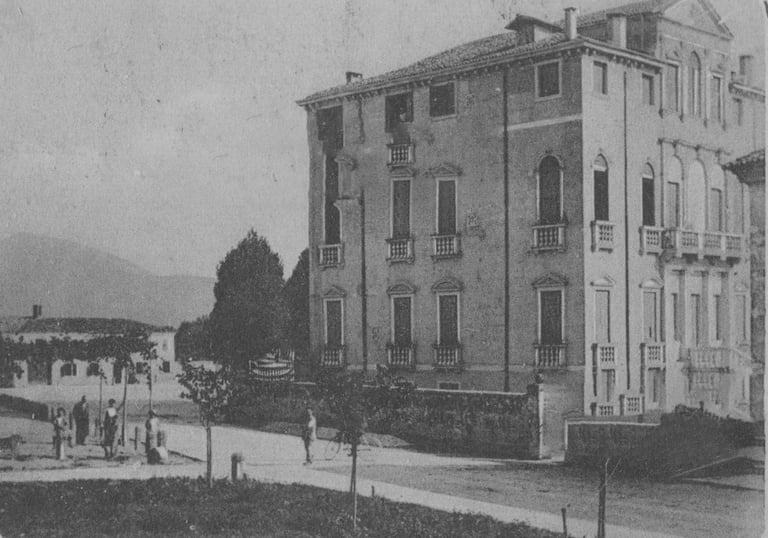
Villa Venier - Vo' Vecchio 1912
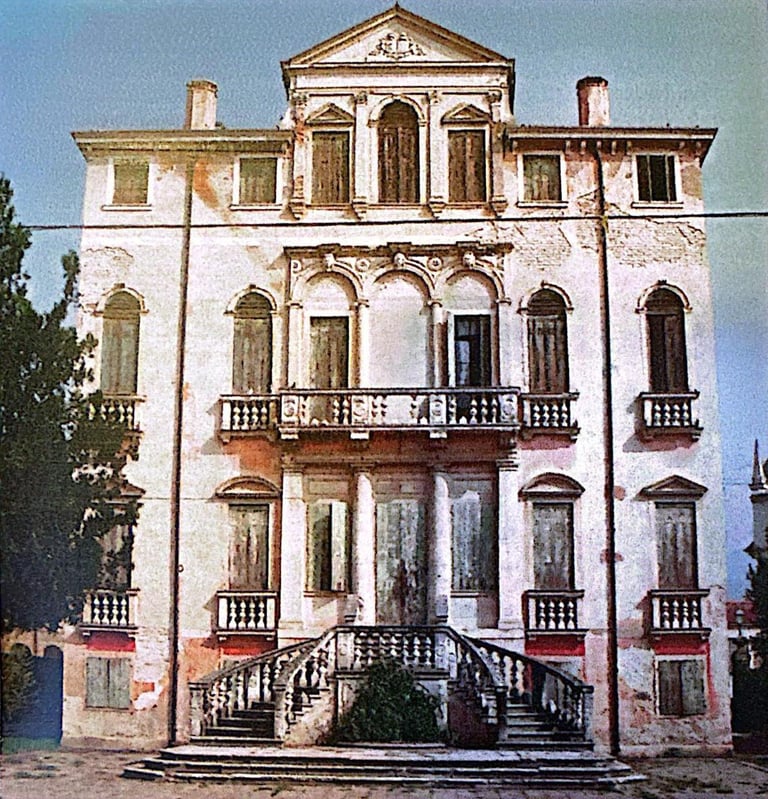
Between the 16th and 18th centuries, a branch of the great Venetian family of the Contarini acquired vast estates on the western slope of the Colli Euganei, including the medieval Castle of Nina. A valuable record from 1605 mentions a “proud palace” owned by Alvise Contarini, built in a traditional style with a strongly emphasized vertical design.
The building features a tripartite square plan with central superimposed halls, rooms on either side, and an internal staircase; a low service ground floor designed to “separate” the structure from the ground and support the two grand piano nobile levels, placed one above the other and architecturally distinct; and finally an attic floor intended for the servants.
The windows are characterized by lively stone balustrades, triangular and arched pediments, or arches decorated at the keystone with elegant modillions. The classical style is reserved for the central section of the main façade, facing south, where the canonical superimposition of columns and pilasters can be observed: Tuscan on the first floor, Ionic on the second, and Corinthian on the roof pediment. Decorating the keystones of the three-light window on the second piano nobile are three splendid protomes, probably depicting a Landsknecht warrior flanked by two noble queens. The most striking element is the external staircase with two semicircular flights connected to a third, which, resting on an arch, leads to the main entrance of the palace. During the 17th century, an oratory, an inn, and the square were added to the palace; together with the river port, they gave rise to a small settlement. The complex represents one of the finest examples of urban planning organized around the layout of a Venetian villa.
In the 19th century, the palace underwent a complete renovation aimed at modernization, commissioned by Maria Giovanelli, wife of Giovan Battista Venier, who altered its layout: on the rear side of the building, a projecting semi-octagonal structure was added to house the monumental “a bovolo” spiral staircase by Giuseppe Jappelli Meduna. The central enfilade halls were subdivided, the rooms changed in size, and new suspended ceilings were introduced, featuring tempera-painted decorations in Neo-Baroque and Neo-Rococo style. These modifications transformed the palace into a true summer residence.
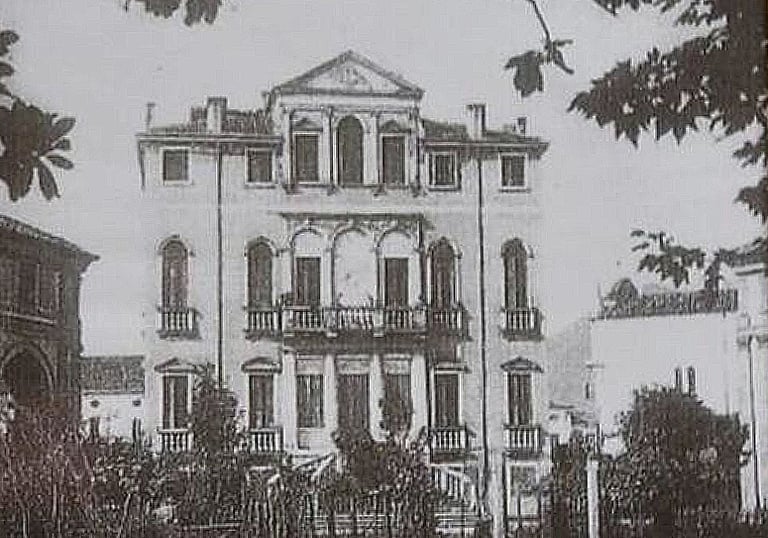
Villa Contarini Giovanelli Venier - 1940's
In 1927, the palace of Vo’, by then subdivided and stripped of its furnishings, was purchased by the Vicenza industrialist Gino Bonazzi and later by the Bolognese painter Mario Pozzati, an anti-fascist who made the villa his residence. It was there that his son Concetto Pozzati, the renowned contemporary painter, was born. Later, Pozzati sold the villa to the merchant Sirio Landini who, in 1943, rented it to the Suore Elisabettine di Padova. They used it to shelter evacuees from nearby cities subjected to Allied bombings. In December 1943, the villa was requisitioned by the fascist authorities of the Repubblica Sociale Italiana and turned into a concentration camp for Jews from the provinces of Padua and Rovigo. For about seven months, up to seventy people were detained in the camp at Vo’, arrested in compliance with the circular issued on 30 November 1943 by the Ministry of the Interior of the Salò Republic under Buffarini Guidi.
On 17 July 1944, the forty-seven Jews then held in the camp were taken by the Germans, imprisoned in Padua, later transferred to Trieste to the Risiera di San Sabba, and finally deported in freight cars to the Auschwitz–Birkenau concentration and extermination camp in Poland. Of the Jews detained in Vo’, only three survived: Ester Hammer, Bruna Namias, and Sylva Sabbadini. On 17 July 2001, a memorial plaque bearing the names of the forty-seven Jews imprisoned here was placed outside the palace.
Between 1624 and 1642, the barchesse (service wings) were added to the villa. They are arranged in a diverging layout and connected by a semicircular enclosing wall that frames an Italian-style garden. Each barchessa is marked by eight round arches framed by Tuscan pilasters, a high entablature, and small attic windows for the granaries. Beneath the porticoes were the servants’ quarters, storage rooms, cellars, carriage houses, and stables: all the spaces were arranged on two floors. Their architect was not the same as that of the villa itself: the distinctly Baroque conception of space reveals the design of a planner inspired by the architectural solutions then in vogue in capital cities such as Rome and Venice.
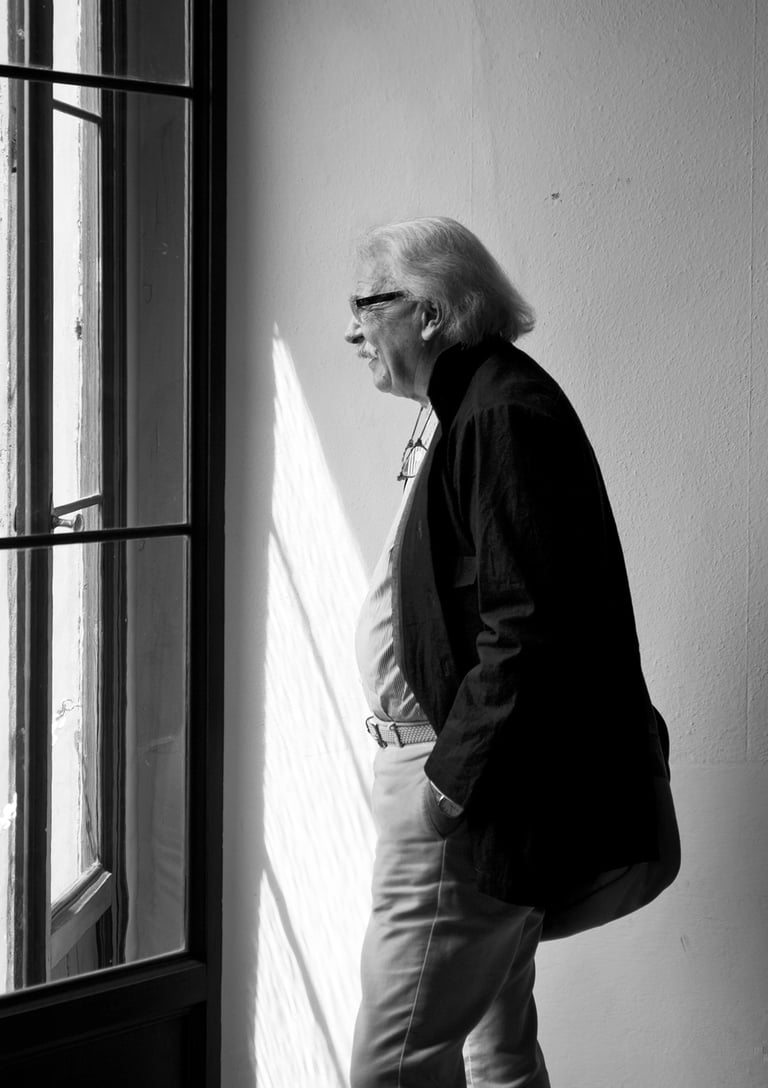
Concetto Pozzati (Vo' 1° december 1935 – august 1° agosto 2017) Italian famous painter, son of Mario Pozzati
A short walk from the palace stands a small oratory dedicated to Saint Lawrence, deacon and martyr. Originally, it had a single altar and was blessed on 29 May 1619. Its architecture appears to be inspired by models by Vincenzo Scamozzi: in particular, the pavilion vault recalls the solution adopted for the Church of San Gaetano in Padua (1582–1586). A Latin inscription recorded that Alvise had erected in Vo’ a place of worship where every traveler could pause in prayer. The present Chapel of Saint Anne is the former oratory and stands beside the later new Church of Saint Lawrence, which inherited its title from it. The church was completed in 1670, as in that very year it was seen by the Bishop of Padua (later canonized), Gregorio Barbarigo, who during his pastoral visit to the parish of Zovon described it as “magnifice constructum.” It is an elegant single-nave church in Palladian style, flanked by a small bell tower whose design is comparable to the work of the architect Giuseppe Sardi, active in Venice in the second half of the 17th century. In the second half of the 17th century, the square adjoining the villa took on its present appearance thanks to Piero, son of Alvise Contarini, likely on the occasion of the establishment of a weekly Thursday market granted in 1674 by the Venetian Senate to the Contarini family, who already held the right to operate an inn and a butcher’s shop there. Two large arcaded buildings were constructed to host various activities: shops, artisans’ homes, and merchants’ premises on the first floor, with storage rooms and granaries in the attic.
In the 1950s, the villa was purchased by the Municipality of Vò, which converted its interior into housing for municipal employees and primary school teachers. One of the two barchesse was used for many years as the local primary school, while the other wing, privately owned, still houses a bar-trattoria today.
In 2012, a major restoration project was completed, restoring Villa Contarini Giovanelli Venier to its former splendor. Today, the interior rooms host an engaging museum itinerary: on the piano nobile is the Museum of the Landscape, featuring a rich collection of copies of ancient maps of the territory; the second floor is dedicated to temporary exhibitions; and the ground floor has become a Place of Remembrance of the Shoah, preserving the remains of the kitchens used by the internees and displaying panels that recount the tragedy they experienced.
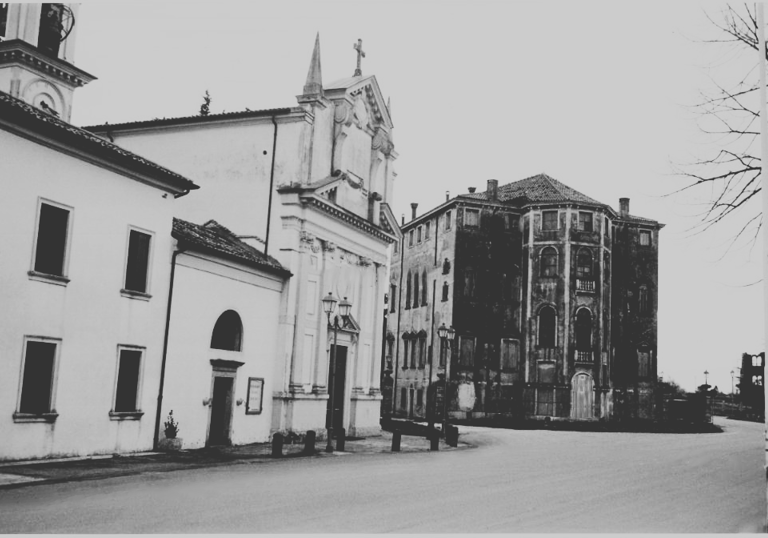
San Lorenzo Church - 1950's
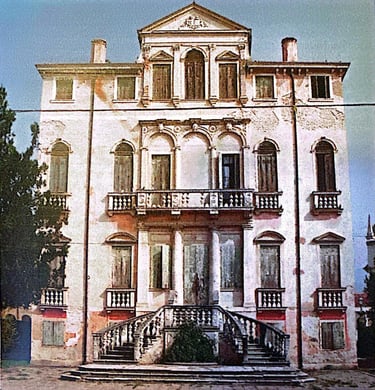
Villa Contarini Giovanelli Venier - Before the 2012 restoration